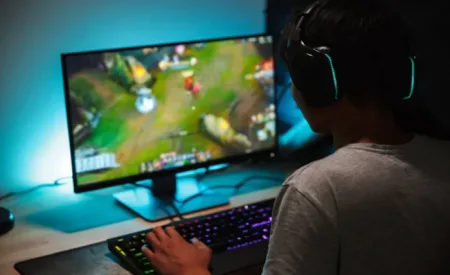
We spend a lot of time obsessing over our physical fitness. We track our steps, we drink the green sludge smoothies and we pretend to enjoy burpees. But when it comes to the three pounds of grey matter sitting between our ears, we often let it get a little flabby. This article examines how strategy-based casino games can function as a “mental gym” for your brain, helping to sharpen cognitive skills like probabilistic reasoning and emotional regulation.
Let’s get serious for a moment: most “brain training” apps are boring. Tracing shapes or doing repetitive math problems feels a lot like homework, and nobody wants to do homework after a long day at the office.
The “Mental Gym” You Didn’t Know You Needed
So should we collectively stop doing boring tasks? In a way, yes, because the brain creates new neural pathways when it is challenged, not when it is bored. This is why researchers have been looking at more engaging ways to keep our cognitive gears greased. Surprisingly, the complex decision-making found in strategic gaming is starting to look a lot like a mental workout.
We aren’t talking about mindlessly pressing a button. We are talking about the high speed processing required to play strategy-heavy casino games where every tiny move and decision counts. Whether it’s calculating the odds of a flush in poker or deciding whether to hit or stand in blackjack, these activities force your brain to wake up and pay attention. Especially when something is on the line. It’s like a HIIT workout for your prefrontal cortex, but with better graphics. And perhaps more dopamine.
Probability: The Math Teacher You Actually Listen To
Remember when you sat in high school algebra thinking, “I will never use this”? Well, the joke is on you.
If you sit down at a card table (virtual or physical), you are suddenly doing rapid-fire probability assessments. You are analyzing the “knowns” (your cards, the dealer’s up-card) against the “unknowns” (the rest of the deck). You are estimating risk versus reward in seconds.
This is what scientists call “probabilistic reasoning.” It’s a critical skill that helps us make better decisions in real life, from investing money to deciding if we can make that yellow light (don’t do that, by the way).
Engaging in these games keeps your numerical skills sharp. It forces you to look at a situation and say, “Okay, the stats say this is a bad idea,” rather than just going with your gut. It turns you into a more analytical thinker, which is a pretty handy side effect of trying to beat the dealer.
The Poker Face: Mastering Emotional Control
There is another side to the “mental gym” that has nothing to do with math and everything to do with psychology. It’s the art of… wait for it… keeping your cool.
In the heat of the moment, when the stakes are high, your amygdala (the dramatic, emotional part of your brain) wants to freak out. It wants to chase losses or get overconfident after a win. A good player has to override that impulse. You have to force your logical brain to stay in the driver’s seat while your emotional brain is screaming in the back. Read the full study here.
This is essentially emotional regulation training. Learning to separate your decisions from your emotions is a superpower. It’s the same skill that stops you from sending that angry email to your boss or impulse buying a kayak at 2:00 AM. If you can keep a “poker face” internally, you can handle a lot of life’s curveballs with a bit more grace.
Breaking the “Autopilot” Mode
The biggest enemy of a healthy brain is routine. When we do the same things every day, same commute, same emails, same TV shows, our brains go into “autopilot.” We stop laying down new tracks.
To keep the mind plastic (neuroplasticity is the fancy term), you need novelty. You need to be surprised.
This is where the variety of modern gaming shines. One minute you are navigating the rules of Baccarat, and the next you are figuring out the mechanics of a new slot interface. The constant need to adapt to new rules and visual stimuli disrupts that “zombie mode.” It forces your brain to be present and engaged.
Balance is Key
Now, don’t get it twisted. Playing cards for 12 hours straight isn’t going to turn you into Einstein, just like doing bicep curls for 12 hours won’t turn you into The Rock. It will just make you tired.
The key, as with everything in biology, is balance. Your brain needs rest, it needs nutrition and yes, it needs play. But treating your gaming time as a chance to sharpen your decision-making skills changes the dynamic. It stops being a “guilty pleasure” and starts being a way to keep the cobwebs out of the attic.
So, next time you are strategizing your next move, don’t think of it as wasting time. Think of it as taking your neurons to the gym. Just remember to stretch (and maybe drink some water) occasionally.