

Every house functions as a complex, interconnected mechanical ecosystem. Much like a biological organism, when one joint or component is strained, the surrounding structures are forced to work harder to compensate for the deficit. In the context of residential hardware, this compensation leads to accelerated wear and tear, eventually causing what engineers refer to as system fatigue.
Homeowners often view their appliances and entryways as isolated units but treating them as part of a broader mechanical environment is the key to extending their functional lifespan. By understanding how friction, load distribution, and environmental factors interact, you can optimize your home hardware and prevent cascading failures.
Understanding Mechanical Load and Friction
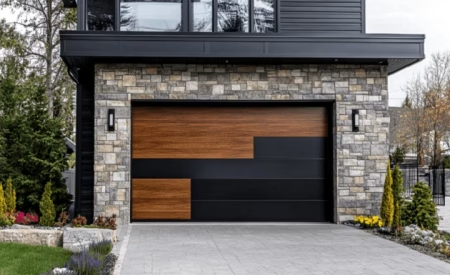
The largest moving structure in any residence is the garage door, making it the perfect case study for understanding system fatigue. This heavy barrier relies on a precise balance of tension, track alignment, and motor output to operate seamlessly. When dust or debris builds up in the tracks, it creates microscopic friction.
Initially, this friction is unnoticeable to the user, but the automatic motor detects the resistance immediately. The motor is forced to draw more power and generate more heat to push past the friction. Over time, this daily strain degrades the internal gears of the opener. The simple act of wiping down tracks and applying a silicone-based lubricant to metal hinges every few months eliminates this friction, restoring the system to its baseline efficiency and protecting the expensive motor unit from premature burnout.
Managing Tension and Weight Distribution
Beyond friction, heavy residential systems rely on proper tension management to function safely. Moving panels that weigh hundreds of pounds require industrial-grade springs to act as counterweights. These springs absorb the brunt of the mechanical load so that the electronic opener only has to exert a minimal amount of lifting force.
When these tension-bearing components lose their elasticity or sustain damage, the weight distribution shifts entirely onto the automated motor and the tracking hardware. Operating a system under these conditions is highly destructive. Because adjusting load-bearing springs involves extreme physical risk, it is critical to rely on experienced technicians for adjustments. Booking a dedicated service for Boise garage door repair ensures that the tension is calculated and restored correctly, neutralizing the risk of sudden mechanical collapse.
The Role of Environmental Controls
A healthy mechanical ecosystem also requires strict environmental controls. Temperature fluctuations, humidity, and invasive moisture are silent destroyers of metal hardware and electronic sensors. Rust degrades the structural integrity of cables and pulleys, while moisture can short-circuit the optical safety sensors located near the floor.
Maintaining the weather seals around your heavy entryways is a fundamental defensive measure. The bottom rubber gasket and the side vinyl trimming act as the primary barrier against the outside climate. Replacing brittle or cracked weatherstripping is an inexpensive upgrade that yields immediate results. It stabilizes the internal temperature of the garage, protecting both the metallic hardware from rust and the electronic components from condensation.
Implementing a Proactive Maintenance Schedule
The most effective way to combat system fatigue is to transition from a reactive mindset to a proactive one. Waiting for a mechanism to stall or snap before addressing it guarantees a more expensive and disruptive repair process.
Establish a routine inspection schedule that includes visual checks, auditory monitoring for grinding noises, and basic lubrication. By systematically addressing minor friction points and ensuring proper load distribution, you preserve the mechanical health of your entire property. A well-maintained home ecosystem operates quietly, efficiently, and predictably, providing reliable shelter and security year after year.